Ido
Ido () is a constructed language derived from a reformed version of Esperanto, and designed similarly with the goal of being an international auxiliary language (or universal second language) for people of diverse languages. To function as an effective international auxiliary language, Ido was designed specifically to be grammatically, orthographically, and lexicographically regular (and, above all, easy to learn and use). It is the most successful of the many Esperanto derivatives, known as Esperantidoj. Ido was created in 1907 out of a desire to reform the perceived flaws of Esperanto, a language that had been created 20 years earlier to facilitate international communication. The name comes from the Esperanto word ido, meaning "offspring", since the language is a derivative of Esperanto. After its inception, Ido was endorsed by some of the Esperanto community. A setback occurred with the sudden death in 1914 of one of its most influential proponents, Louis Couturat. In 1928, the Ido promoter Otto Jespersen quit the movement for his own language Novial. The popularity of Ido decreased for two reasons: the emergence of further schisms developing from competing reform projects, and a general lack of awareness of Ido as a candidate for an international language. It was not until the spread of the Internet that it began to regain popularity. Ido uses the same 26 letters as the English (Latin) alphabet, with no diacritics.
Translate in Ido ↗Ido () is a constructed language derived from a reformed version of Esperanto, and designed similarly with the goal of being an international auxiliary language (or universal second language) for people of diverse languages. To function as an effective international auxiliary language, Ido was designed specifically to be grammatically, orthographically, and lexicographically regular (and, above all, easy to learn and use). It is the most successful of the many Esperanto derivatives, known as Esperantidoj. Ido was created in 1907 out of a desire to reform the perceived flaws of Esperanto, a language that had been created 20 years earlier to facilitate international communication. The name comes from the Esperanto word ido, meaning "offspring", since the language is a derivative of Esperanto. After its inception, Ido was endorsed by some of the Esperanto community. A setback occurred with the sudden death in 1914 of one of its most influential proponents, Louis Couturat. In 1928, the Ido promoter Otto Jespersen quit the movement for his own language Novial. The popularity of Ido decreased for two reasons: the emergence of further schisms developing from competing reform projects, and a general lack of awareness of Ido as a candidate for an international language. It was not until the spread of the Internet that it began to regain popularity. Ido uses the same 26 letters as the English (Latin) alphabet, with no diacritics. It draws its vocabulary from English, French, German, Italian, Latin, Russian, Spanish and Portuguese, and is largely intelligible to those who have studied Esperanto. Several works of literature have been translated into Ido, including The Little Prince, the Book of Psalms, and the Gospel of Luke.
Global / other
Present-day use
The captured source does not contain a separate current-use account.
Origins
The captured article does not contain a separate origins section. See the historical account and linked source.
Development
The captured article does not contain a distinct historical account. No chronology has been invented.
Writing
Ido uses the same 26 letters as the English alphabet and ISO Basic Latin alphabet with three digraphs and no ligatures or diacritics. Where the table below lists two pronunciations, either is perfectly acceptable. The digraphs are:
Beyond the typeface.
Signs, manuscripts, published pages and contextual photographs, with their place, period, source and reuse terms. Captions identify historical spellings, regional examples, community references and character imagery.
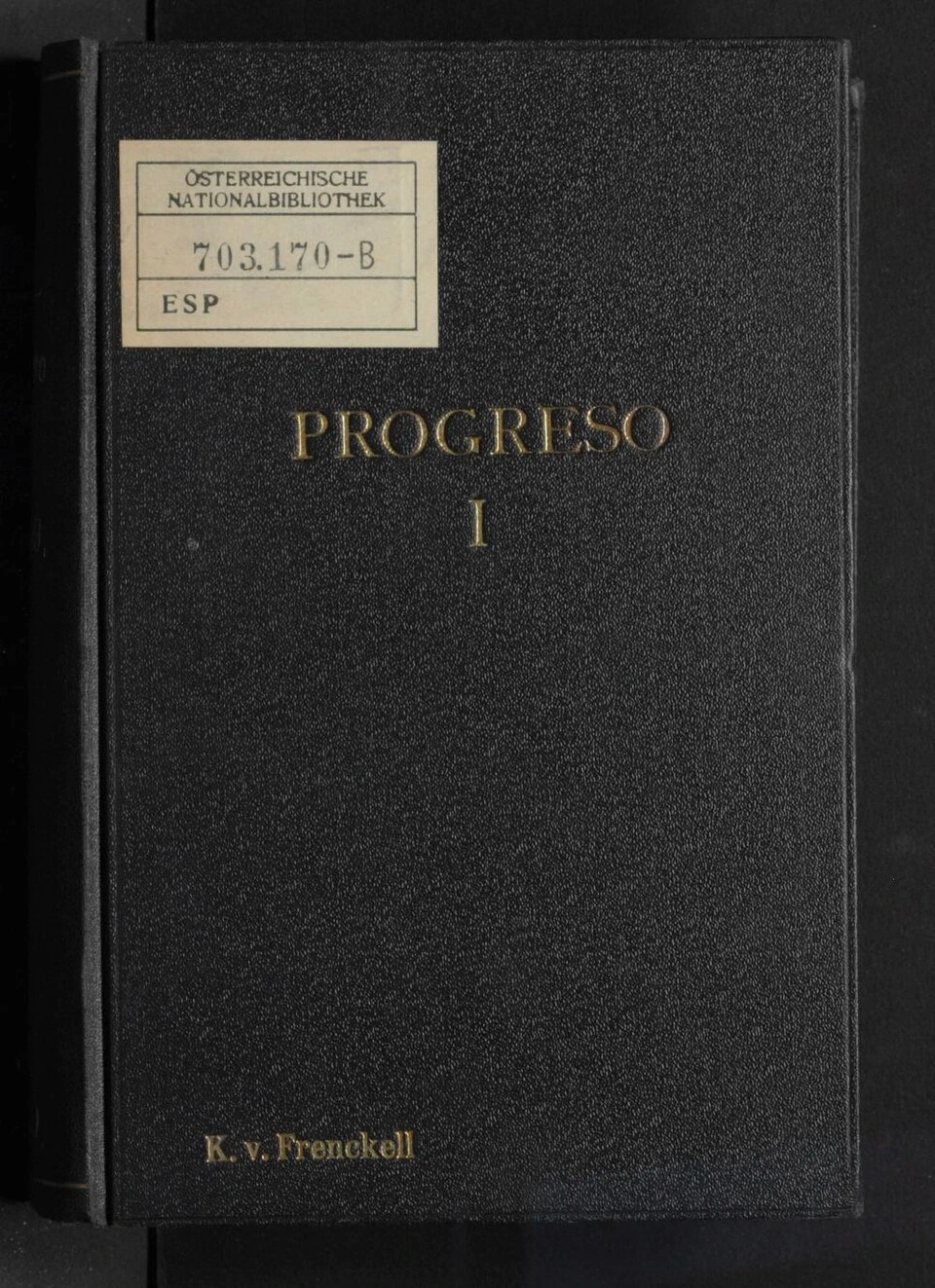
First-page scan of the first volume of Progreso, 1908. Commons explicitly gives the publication language as Ido.
Saved in Babelbook · resized display copy. Select the image to open it independently of its source.
Louis Couturat; scan Austrian National Library · Source ↗Public domain ↗View the local visual field note
This constructed-language or category entry has no geographic reference points in the collection.
Reference & context ↗Babelbook · original editorial illustration · Babelbook original illustration
Source excerpts, selected, shortened and where noted editorially corrected from Ido by Wikipedia contributors. Retrieved 2026-10-05. CC BY-SA 4.0. These excerpts are not an independently verified scholarly history; missing accounts are identified above.
Read further in the source
Orthography
Ido uses the same 26 letters as the English alphabet and ISO Basic Latin alphabet with three digraphs and no ligatures or diacritics. Where the table below lists two pronunciations, either is perfectly acceptable.
The digraphs are: