Inuktitut
Inuktitut ( ih-NUUK-tə-tuut; Inuktitut: [inuktiˈtut], syllabics ᐃᓄᒃᑎᑐᑦ), also known as Eastern Canadian Inuktitut, is one of the principal Inuit languages of Canada. It is spoken in all areas north of the North American arctic tree line, including parts of the provinces of Newfoundland and Labrador, Quebec, to some extent in northeastern Manitoba as well as the Northwest Territories and Nunavut. It is one of the aboriginal languages written with Canadian Aboriginal syllabics. It is recognized as an official language in Nunavut alongside Inuinnaqtun and both languages are known collectively as Inuktut. Further, it is recognized as one of eight official native tongues in the Northwest Territories. It also has legal recognition in Nunavik—a part of Quebec—thanks in part to the James Bay and Northern Quebec Agreement, and is recognized in the Charter of the French Language as the official language of instruction for Inuit school districts there. It also has some recognition in Nunatsiavut—the Inuit area in Labrador—following the ratification of its agreement with the government of Canada and the province of Newfoundland and Labrador. The 2016 Canadian census reports that 70,540 individuals identify themselves as Inuit, of whom 37,570 self-reported Inuktitut as their mother tongue. The term Inuktitut is also the name of a macrolanguage and, in that context, also includes Inuvialuktun, and thus nearly all Inuit dialects of Canada. However, Statistics Canada lists all Inuit languages in the Canadian census as Inuktut.
Translate in Inuktitut ↗Inuktitut ( ih-NUUK-tə-tuut; Inuktitut: [inuktiˈtut], syllabics ᐃᓄᒃᑎᑐᑦ), also known as Eastern Canadian Inuktitut, is one of the principal Inuit languages of Canada. It is spoken in all areas north of the North American arctic tree line, including parts of the provinces of Newfoundland and Labrador, Quebec, to some extent in northeastern Manitoba as well as the Northwest Territories and Nunavut. It is one of the aboriginal languages written with Canadian Aboriginal syllabics. It is recognized as an official language in Nunavut alongside Inuinnaqtun and both languages are known collectively as Inuktut. Further, it is recognized as one of eight official native tongues in the Northwest Territories. It also has legal recognition in Nunavik—a part of Quebec—thanks in part to the James Bay and Northern Quebec Agreement, and is recognized in the Charter of the French Language as the official language of instruction for Inuit school districts there. It also has some recognition in Nunatsiavut—the Inuit area in Labrador—following the ratification of its agreement with the government of Canada and the province of Newfoundland and Labrador. The 2016 Canadian census reports that 70,540 individuals identify themselves as Inuit, of whom 37,570 self-reported Inuktitut as their mother tongue. The term Inuktitut is also the name of a macrolanguage and, in that context, also includes Inuvialuktun, and thus nearly all Inuit dialects of Canada. However, Statistics Canada lists all Inuit languages in the Canadian census as Inuktut.
North America
Present-day use
The captured source does not contain a separate current-use account.
Origins
The captured article does not contain a separate origins section. See the historical account and linked source.
Development
The captured article does not contain a distinct historical account. No chronology has been invented.
Writing
Canadian Aboriginal syllabics (catalog classification; see the source for context).
Beyond the typeface.
Signs, manuscripts, published pages and contextual photographs, with their place, period, source and reuse terms. Captions identify historical spellings, regional examples, community references and character imagery.
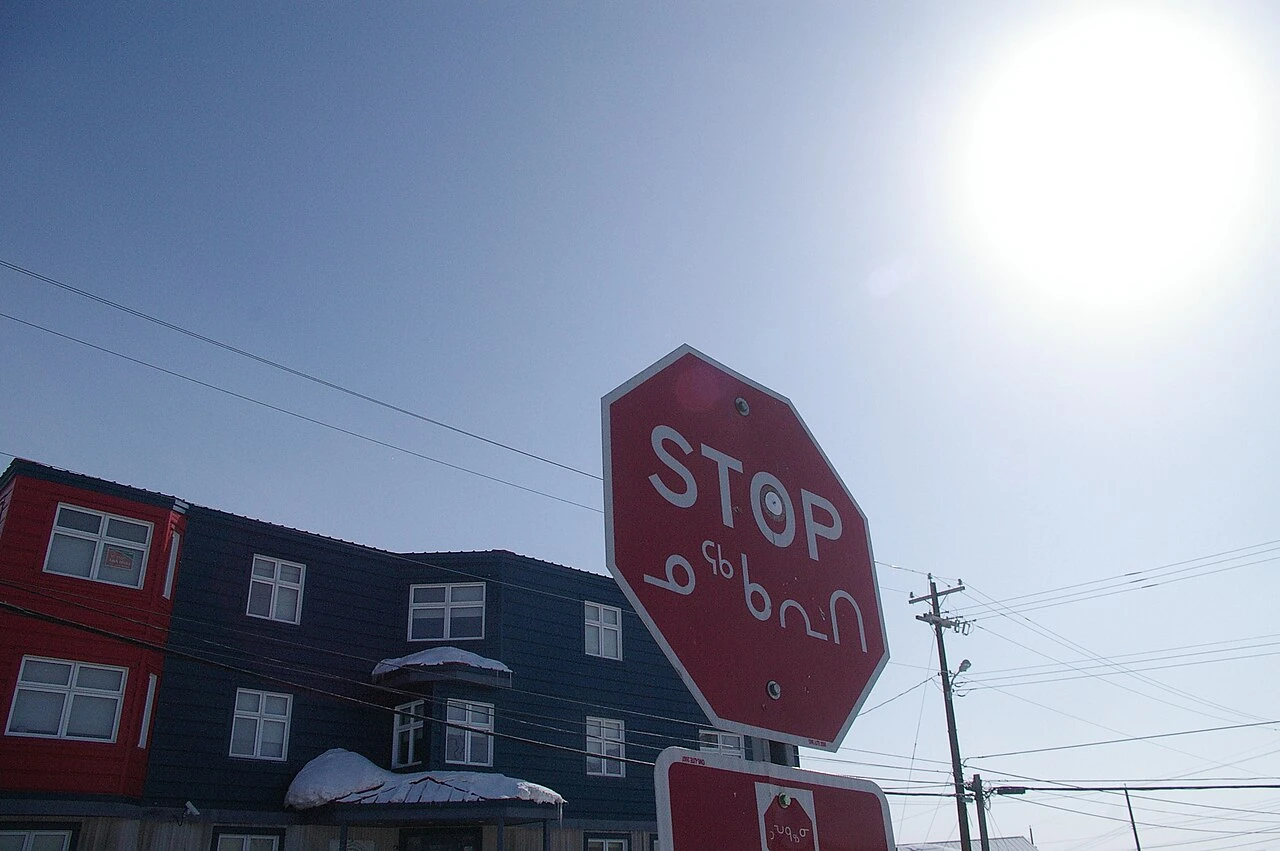
An in-use stop sign identified by its photographer as Inuktitut written in syllabics.
Saved in Babelbook · resized display copy. Select the image to open it independently of its source.
Anick-Marie · Source ↗CC BY-SA 2.0 ↗View the local visual field note
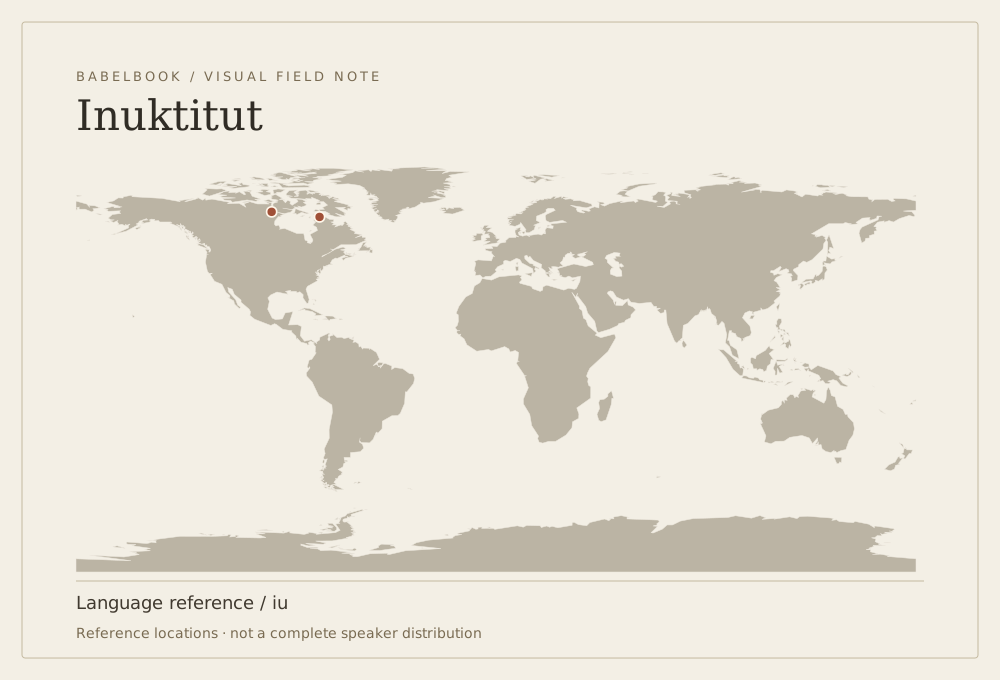
Representative reference points from Glottolog. Historical entries show reference locations, not current speakers. 2 points.
Reference & context ↗Babelbook · original editorial illustration · CC BY 4.0 · Glottolog locations; public-domain Natural Earth land
Source excerpts, selected, shortened and where noted editorially corrected from Inuktitut by Wikipedia contributors. Retrieved 2026-10-05. CC BY-SA 4.0. These excerpts are not an independently verified scholarly history; missing accounts are identified above.